
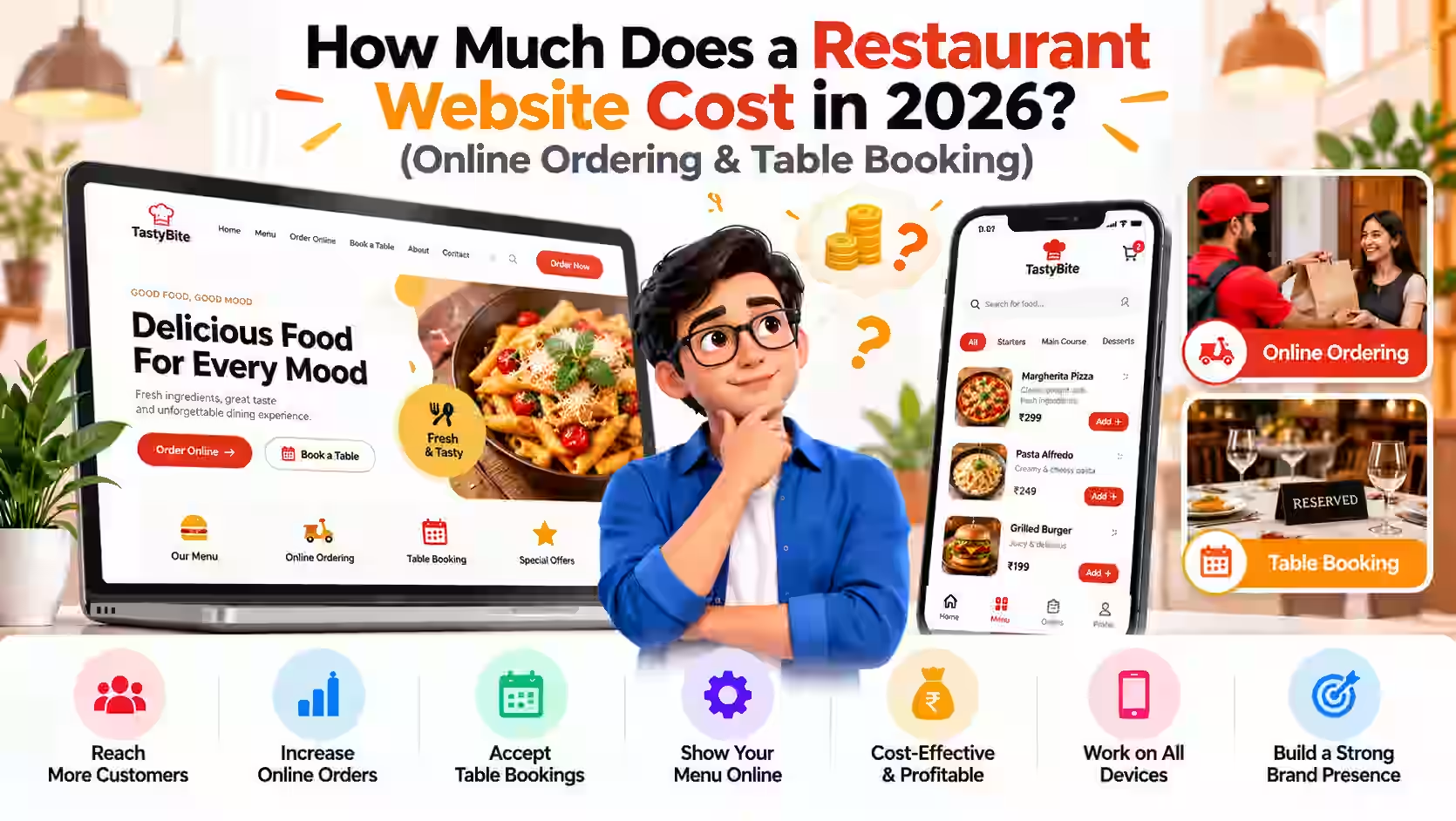

If you run a restaurant in the US, UK, Canada, Australia or the UAE, you have probably asked the same question: what should a proper restaurant website actually cost? The honest answer is that it depends on what the site needs to do. A simple menu site and a full online ordering and table booking platform are very different projects. This guide explains what to include, what drives the price, and why owning your ordering system can protect your margins.
What a Restaurant Website Should Include
Before talking about budget, decide what the website must achieve. For most restaurants the goals are simple: help hungry people find you, show them why they should choose you, and make it easy to order or book.
A Clear, Up-to-Date Menu
Your menu is the most visited page on any restaurant website. Publish it as real text, not a PDF or a photo, so it loads fast on phones and can be read by Google. Include categories, prices, and notes for allergens and dietary options such as vegetarian, vegan or halal.
Online Ordering
Online ordering lets customers place pickup or delivery orders directly on your site. It is the feature that most changes the economics of a restaurant website, and we cover it in detail below.
Table Booking and Reservations
A reservation form or booking widget reduces phone calls during busy service and captures bookings after hours. Good systems let guests choose a date, time and party size, and send a confirmation automatically.
Mobile-First Design
Most people look up restaurants on their phones, often while already out and deciding where to eat. Your site should load quickly, have large tap-friendly buttons, and put the key actions, such as order, book and call, within a thumb's reach.
Google Maps, Hours and Contact Details
Embed a Google Map, show your address, opening hours (including holiday hours) and a click-to-call phone number. If you have several locations, give each its own page.
Local SEO Basics
Local SEO helps you appear when someone searches for something like "Italian restaurant near me". The basics include a descriptive title and meta description on each page, your name, address and phone number written consistently, a complete Google Business Profile linked to your site, and fast page speed. Photos, location-specific wording and customer reviews all help too.
What Drives the Cost of a Restaurant Website
Prices vary widely by country and by who builds the site. As a general, typical range, a simple brochure-style restaurant site with a menu, photos and contact details is the lowest tier. Adding online ordering or table booking usually moves the project into a higher range, and a fully custom ordering system with payments, delivery zones and an admin dashboard sits higher still. Treat any figure as a ballpark and always ask for a written quote.
Number of Pages and Design
A five-page site is much quicker to build than a twenty-page, multi-location site. Custom design and branded photography cost more than a clean template, though a well-chosen template is often enough for a single restaurant.
Online Ordering Functionality
Ordering requires menu management, item options, pickup and delivery settings, payment processing and order notifications. The more complex your menu and delivery rules, the more development time is needed.
Booking System
A simple booking form is inexpensive. A live table-management system with availability rules costs more, and some third-party tools add a monthly fee.
Content, Photos and Copywriting
Good food photography is worth the investment. If you need a photographer or copywriter, include that in your budget.
SEO, Hosting and Ongoing Support
Do not forget running costs: domain, hosting, payment processing fees, and maintenance or support. Ask what is included after launch and for how long.
Why Owning Your Ordering System Beats Paying Commission
Many restaurants rely on third-party delivery marketplaces. They bring visibility, but they typically charge a commission on every order. That commission is taken from revenue that already has thin margins. The marketplace also owns the customer relationship, so you often cannot easily contact those customers again.
With your own ordering system on your own website, you keep the customer data, control your branding, and avoid paying a percentage of each order to a middleman. You will still pay normal card processing fees and any delivery costs, but you are not handing over a large slice of every sale. Over a year, the difference can be significant for a busy restaurant.
This does not mean you must leave marketplaces entirely. Many owners use them for discovery, then encourage repeat customers to order directly through their own site with offers, loyalty perks or simply a reminder printed on packaging and receipts.
How to Get Good Value
- Start with the essentials: menu, ordering or booking, map, and contact details.
- Choose a platform you can update yourself, so menu changes do not need a developer.
- Ask what is included: basic SEO, mobile design, a contact form, and post-launch support.
- Plan for growth, so you can add features later without rebuilding the site.
- Check that the site works well on a mid-range phone with an average connection.
Final Thoughts
A restaurant website is not just a digital menu. Done well, it is your busiest, most reliable front door: it gets you found locally, takes orders and bookings around the clock, and keeps more of every sale in your pocket. Start by defining what you need today, set a realistic budget, and choose a partner who explains costs clearly.
Ready to Get Your Restaurant Online?
Fevoff Industries builds websites for clients worldwide, starting at $1,000 USD. Every package includes up to 5 pages, a contact form, basic SEO and 30 days of support. To talk about your restaurant, visit the contact page at fevoffindustries.com and tell us what you need.