
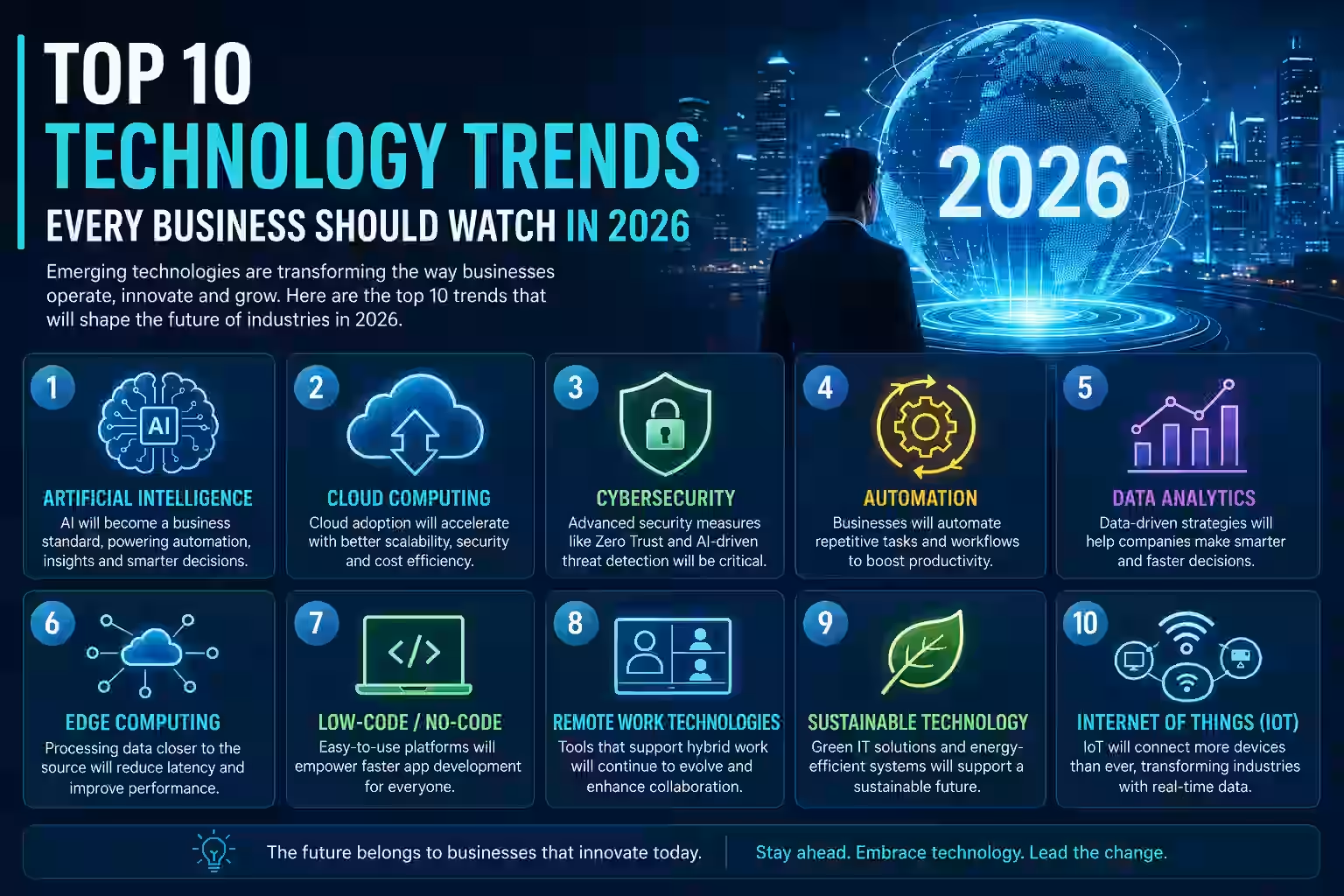

Technology is evolving faster than ever, and businesses that adapt early gain a significant competitive advantage. From Artificial Intelligence to cloud computing, new innovations are changing how companies operate, serve customers, and make decisions.
In this article, we'll explore the top technology trends that are expected to shape businesses in 2026.
1. Artificial Intelligence Becomes a Business Standard
AI is no longer just for large enterprises. Small and medium-sized businesses are now using AI for:
- Customer support chatbots
- Content generation
- Predictive analytics
- Sales forecasting
- Process automation
AI helps businesses reduce costs while improving customer experience.
2. Cloud Computing Continues to Grow
Cloud platforms allow businesses to scale quickly without investing heavily in physical infrastructure.
Benefits include:
- Lower infrastructure costs
- Better security
- Automatic backups
- Easy collaboration
- Remote accessibility
Popular cloud providers include AWS, Microsoft Azure, and Google Cloud.
3. Cybersecurity Takes Center Stage
With cyber threats increasing every year, businesses are investing more in:
- Multi-factor authentication
- Endpoint protection
- Zero Trust security
- Employee awareness training
- Regular security audits
Security is no longer optional—it's a necessity.
4. Automation Improves Productivity
Automation tools are helping businesses eliminate repetitive tasks.
Examples include:
- Invoice processing
- Email automation
- HR onboarding
- CRM workflows
- Marketing campaigns
Employees can focus more on strategic work instead of manual processes.
5. Data Analytics Drives Better Decisions
Businesses generate huge amounts of data every day.
Modern analytics tools help organizations:
- Understand customer behavior
- Improve marketing campaigns
- Forecast demand
- Optimize operations
- Increase profitability
Data-driven decisions reduce guesswork.
6. Edge Computing Reduces Latency
Instead of sending data to distant cloud servers, edge computing processes data closer to users.
Benefits include:
- Faster response times
- Lower bandwidth usage
- Better performance
- Improved IoT applications
7. Low-Code and No-Code Development
Businesses can now build applications without extensive programming knowledge.
Advantages include:
- Faster development
- Lower costs
- Easier maintenance
- Rapid prototyping
8. Remote Work Technologies Continue to Evolve
Hybrid work is becoming the norm.
Businesses are investing in:
- Video conferencing
- Project management tools
- Secure VPNs
- Cloud collaboration software
9. Sustainable Technology
Companies are becoming environmentally responsible by using:
- Energy-efficient data centers
- Green cloud hosting
- Digital documentation
- Smart power management
10. Internet of Things (IoT)
IoT devices are transforming industries such as healthcare, manufacturing, logistics, and agriculture.
Common applications include:
- Smart factories
- Asset tracking
- Predictive maintenance
- Smart homes
Final Thoughts
Technology will continue to transform every industry in 2026. Businesses that embrace AI, automation, cybersecurity, and cloud computing will be better positioned for long-term success.
Investing in modern technology today can improve efficiency, reduce costs, and create new growth opportunities tomorrow.